When people in Pennsylvania need help navigating life’s challenges, they don’t always know where to turn or what options exist. That’s where PA 211 comes in. More than a phone number, PA 211 is a statewide network that connects people in all 67 counties to vital local resources and helps communities respond to real, urgent needs.
Available 24/7, PA 211 connects Pennsylvanians to free, confidential support—from help with housing, utilities, food, and childcare to recovery services, employment assistance, and more. Individuals can call 211, text 898-211, or chat with a trained resource navigator to get connected to programs and services in their community, or search PA 211’s database of more than 80,000 resources to find support that meets their needs.
Beyond individual support, PA 211 plays a critical role in strengthening communities and informing decision-makers. By capturing real-time data on what Pennsylvanians need most, PA 211 helps nonprofits, local leaders, and lawmakers understand gaps, respond faster during crises, and invest in solutions that help all to thrive.
How is PA 211 helping Pennsylvanians?
A Lifeline for Pennsylvanians
PA 211 remains one of the most reliable entry points for help in PA. Every day, people reach out looking for food assistance, housing and utility help, child care, health services, crisis support, and more. On the other end of the line is a trained Resource Navigator who listens, asks the right questions, and connects them to local resources that can make a real difference. Get connected at pa211.org.
Responding in Crisis
As disasters become more frequent and severe across Pennsylvania, coordinated systems are essential to protecting communities. PA 211 plays a central role in that ecosystem, ensuring residents can access accurate information, immediate relief, and long-term recovery support. This work is grounded in partnerships with the Pennsylvania Emergency Management Agency, Pennsylvania Voluntary Organizations Active in Disaster, the Department of Human Services, and key response partners like Team Rubicon and Airbnb.
Financial Security Through VITA
The Volunteer Income Tax Assistance (VITA) program provides free, reliable tax preparation for individuals and families with low to moderate income, helping many ALICE households keep more of what they earn and access critical tax credits. Through a strong partnership between PA 211, local United Ways, and community VITA sites, we made it easier than ever for Pennsylvanians to schedule appointments and get the tax support they needed. Learn More.
Innovative Pathways Forward
PA 211 provides the infrastructure that enables information to be shared among many organizations regardless of the technology they prefer to use. Our model focuses on interoperability and creating a holistic coordination of care for members of our community. All stakeholders in our communities are invited to take advantage of our tools to understand the needs in their communities, improve accessibility, track service outcomes, and gain an overall picture of well-being locally. Learn more.
How can you support PA 211?
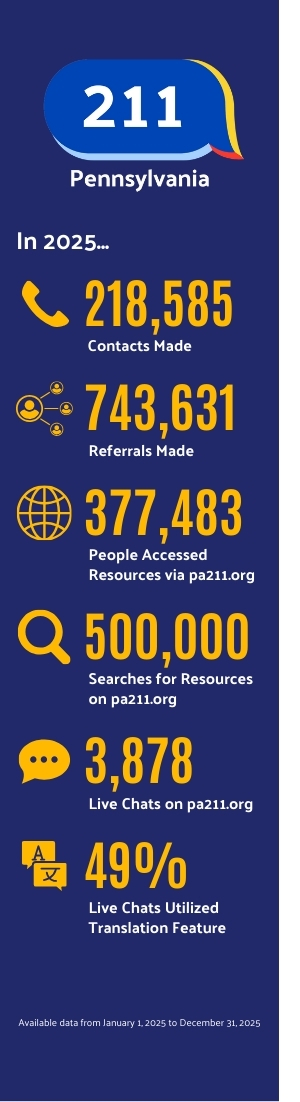
Demand for PA 211 continues to grow. Each year, more Pennsylvanians reach out for help, and the challenges they face are increasingly complex, often involving multiple, interconnected needs. Last year, PA 211 provided 743,631 referrals to Pennsylvanians in need – an increase of 79,144 from 2024. As referrals increase, so does the importance of a strong, well-coordinated system that can respond effectively.
PA 211 is made possible through collaboration, investment, and shared commitment of public and private entities. Support comes in many forms, from funding and partnerships to advocacy and awareness.
Nonprofits can strengthen PA 211 by keeping program information up to date and using 211 dashboards to identify gaps and improve coordination. Community leaders and funders can invest in PA 211’s infrastructure to ensure it remains accessible, responsive, and available statewide. Lawmakers can champion PA 211 as a proven, cost-effective tool that supports residents, informs policy, and builds community resilience.